African News
Resurgence of xenophobic violence: Nigerians remain primary targets

…As 130 citizens seek return
…FG urged to act beyond condemnation
…Countries issue travel advisory as anti-migrant protests grow
…Experts query SA’s ‘Ubuntu’ spirit, see no end to attacks

In late February 2026, many South African provinces and cities were good hosts to global travel industry stakeholders who were in the country for Meetings Africa, an annual travel and tourism industry event. From the improved infrastructure, quality accommodation options, great tours, culinary experiences, and frequent mingling with the citizens, the testimonies abound.
But the most excitement for many were the peace in air and hospitality they felt all over, which they also hoped will be forever.
Sadly, that hope was dashed a few weeks later when the evil drum of xenophobia, once again, echoed hatred on the streets of the rainbow country, making Africans to go after their own, and forsaking brotherliness.
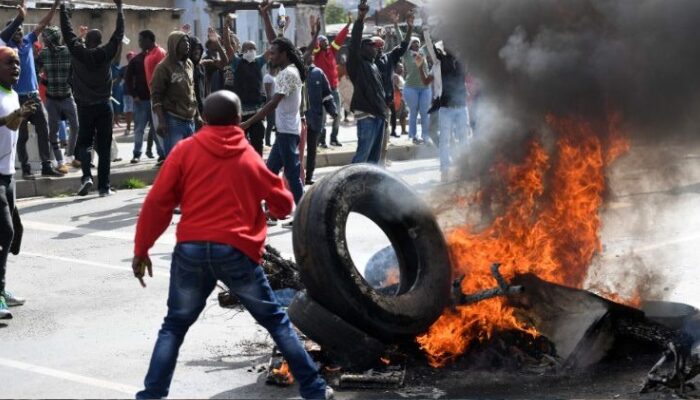
The new wave of violent attacks targeted at immigrants from other African countries followed purported peaceful protests in Pretoria and Johannesburg between April 27 and 29, 2026, which degenerated into attacks till early May, resulting in deaths and lootings.
But the 2026 attack is not the first time South Africa has experienced sporadic waves of violence against foreign nationals and individuals and groups deemed to be living in the country illegally. The ugly trend, which first reared its head in 1998, repeated in 2000, grew in 2005, and 2006, happened thrice in 2008, again in 2015, and 2019. But the 2019 attacks on foreign-owned businesses in the Johannesburg Central Business District was the worst of the attacks, resulting in a dozen deaths, widespread looting and hatred among the citizens and other nationals.
It also ushered in a new dimension; retaliatory attacks against South African interests in other African countries, mainly Zimbabwe and Nigeria, whose nationals were the most victims.
While many African leaders have been condemning the recent attacks, with the Nigerian government claiming that no Nigerian life was lost, many are worried why Nigerians and their businesses have often been targeted during the attacks.
“Why will a whole country descend on immigrants because the local Nigerian Igbo community installed one Solomon Ogbonna Eziko as king of the Igbo people in East London? The best would have been to arrest the so-called king and those that installed him, if you think their action was contrary to your law,” Marcel Mbombi, a Cameroonian national in Johannesburg, decried.
Mbombi, a lawyer, who left his country in the wake of persecution of people from Southern Cameroon, noted that if the government had intervened promptly and appropriately, it would have stopped the outraged locals who took out their anger on Nigerian businesses and individuals of Nigerian descent in the new wave of xenophobia attacks.
“Who is a Nigerian? If I may ask. I know a client whose business was torched and he is not a Nigerian. In South Africa, everybody that is not black South African is regarded as a Nigerian, even Zimbabweans, their close relative. So, every xenomorphic attack affects everyone including me because I am also regarded as a Nigerian. African governments should work together to stop such attacks because it is brother against brother and the world is laughing at us,” he lamented.
He blamed the attacks on the fact that South Africans are the least travelled on the continent, least adventurous outside the country, hence they are also the least tolerant of others.
Olubode Alatise, a Nigerian accountant with an auditing/actuary firm in Sandton, South Africa, also condemned the rash manner in which the situation was handled by the authorities of the host country.
“The government knows that the Progressive Forces of South Africa is more of a militant group raised to push out ‘illegal’ immigrants. They should not have allowed it to lead other civic groups to protest at all,” he said.
“They even went to the Nigerian High Commission in Pretoria, meaning that the situation could have been handled diplomatically, but the authorities looked the other way, only to come back when violence erupted.
“This is not the first time such is happening. How do I face my colleagues in the office and shake hands with them when they silently wish I could just leave their country because someone made them believe that I am taking their space and opportunities”.
Alatise insisted that the 2026 xenophobic attacks in South Africa were not an Igbo or Nigerian thing, but a shameful thing for Africa and the black nation.
According to him, while about 26 Nigerians were reportedly injured and hospitalized, with property worth millions of rands destroyed, the casualties were more including: Ghanaians, Congolese, Cameroonians and other African nationals whose businesses were in the same area or were in the areas considered hub for Nigerians during the attacks.
Toeing the same vein, Ebenezer Obadare, a Douglas Dillon Senior Fellow for Africa Studies, insisted that South Africa cannot hope to confront its xenophobia problem until it owns it.
In his research article titled ‘South Africa’s “Other” Problem’, contributed by Jack Willis and published on April 8, 2026 on Council on Foreign Relations (CFR) website, Obadare queried why a harmless practice whose value is symbolic at best would trigger such a violent reaction as all foreign nationals in South Africa are subject to the laws of the land.
The CFR expert argued that while the protesters, including Prince Xhanti Sigcawu, a traditional leader, viewed the coronation of the Igbo king as offensive to their traditional values and disrespect to the sovereignty of their country, allowing violence to take over, as it makes it look like an excuse for a barely disguised unease with the presence of foreigners in the country.
Speaking on the issue through a telephone interview from Abuja, Susan Akporiaye, national deputy president, Federation of Tourism Associations of Nigeria (FTAN), noted that considering the persistence of the attacks, both Nigerians and South Africans share responsibility in addressing the issue.
“We should not ignore our own faults,” she said, while tasking African governments and nationals on the need to promote unity and mutual respect.
“South Africans highly respect their traditional Zulu King, and according to their customs, only one king is recognized. Many Zulu people perceived this as an attempt to interfere with their culture.”
Speaking on Villa Square, a special segment of Cr8tive 9ja, a weekly tourism and cultural magazine programme, Wole Oyebade, a member of the Guardian Editorial board who spoke from South African, blamed the recent attacks on the political tension in South Africa, stating that the coming elections and political tension have contributed to the situation.
According to him, the oppositions are blaming the immigration policies of the current administration as a major contributor to the increasing crime rate in South Africa.
“For the African continent, they are of the opinion that the Xenophobia attacks have become a reoccurring situation in South Africa, we realize if the government can discourage this attack and insist things are done the normal way, things might change,” Oyebade noted.
While some others think that the Nigerian government should handle the case diplomatically, they also think that it should be firmer this time as South Africans seem happy to raise hands against Nigerians at the slightest provocation.
“We have heard about the federal government summoning the South African High Commissioner, the National Assembly spitting fire, calling for immediate sanctions and pressure on Minister of Foreign Affairs for diplomatic actions, but all that should not end without results,” Osuare Aigbe, a Nigerian business owner in Cape Town, South Africa, said.
Aigbe, who schooled in South Africa, up to PhD level, regretted that despite the many Nigerians that are legal residents, gainfully employed, tax complaint and law abiding, the host country often brand everyone into one bad category and also overlook the fact that that no crime can be successful without their insiders, citizens and even security agents.
“All African nationals here have one form of union or the other they belong to for proper documentation, organisation and assistance when the need arises.
“The Igbo king issue is one of such that can be easily handled. It means other nationals will have to stop their national days and other cultural celebrations they often do in South Africa, which the host also enjoys. You are simply asking others not to come, then stop issuing visas, close your embassies across Africa and recall your nationals and companies in other Africa countries.
“South Africa cannot take this from other Africans. The African Union should act, save the continent and not just sit in Addis Ababa and enjoy estacode, else individual countries should do what they can to protect their citizens, even retaliatory actions,” she noted.
For Ikenna Ozukwu, a Nigerian banker, the federal government should facilitate the safe return of the 130 Nigerians who expressed interest to return to the country from South Africa, and even more.
“I came across some posts on social media that those who wish to return are the illegal residents, but that is not true because I have a business partner over there who has been talking about the challenges they face over there in business just because they are Nigerians.
“Many, even those who are doing well over there want to return, but the reality back home is hunting them and South Africans know that.
“Imagine a South African telling his Nigerian friend to go back home and join bandits and Boko Haram instead of taking over their economy. That is harsh, but we don’t blame them,” he said.
In her conclusion, Aigbe decried that with more populist quasi-vigilante anti-immigrant groups springing up every day in South Africa, such as Operation Dudula, March and March, ActionSA and the MK (Umkhonto weSizwe) Party, which have been implicated in recent incidents of attacks on immigrants and raids on businesses belonging to foreign nationals, and if African governments keep only condemning attacks, xenophobia will degenerate into a more deadly dimension of Afrophobia soon. (BusinessDay)
-

 Politics23 hours ago
‘She has nothing to offer’ — Wike says Ireti Kingibe won’t return to senate
-
Politics17 hours ago
Lagos APC expels Obasa’s allies, Egunjobi, Yusuf over ‘betrayal’
-
Politics23 hours ago
It’s A National Disgrace For Tinubu To Be In France While Macron Is At UNGA – ADC
-
News23 hours ago
Tinubu, Shettima’s Absence: I’m Not Acting President, Says Akpabio
-
Politics22 hours ago
I’ve never seen a president with better plans than Tinubu – Aminu Masari
-
Sports17 hours ago
PSG star Hakimi to stand trial for rape, court confirms
-
Opinion2 hours ago
Obafemi Hamzat: Voice of the street, made for Lagos
-
Business17 hours ago
Aliko Dangote picks power over steel with a $10 billion bet on Africa’s grid