Politics
2027: Seriake Dickson’s rise to kingmaker, as NDC bet pays off

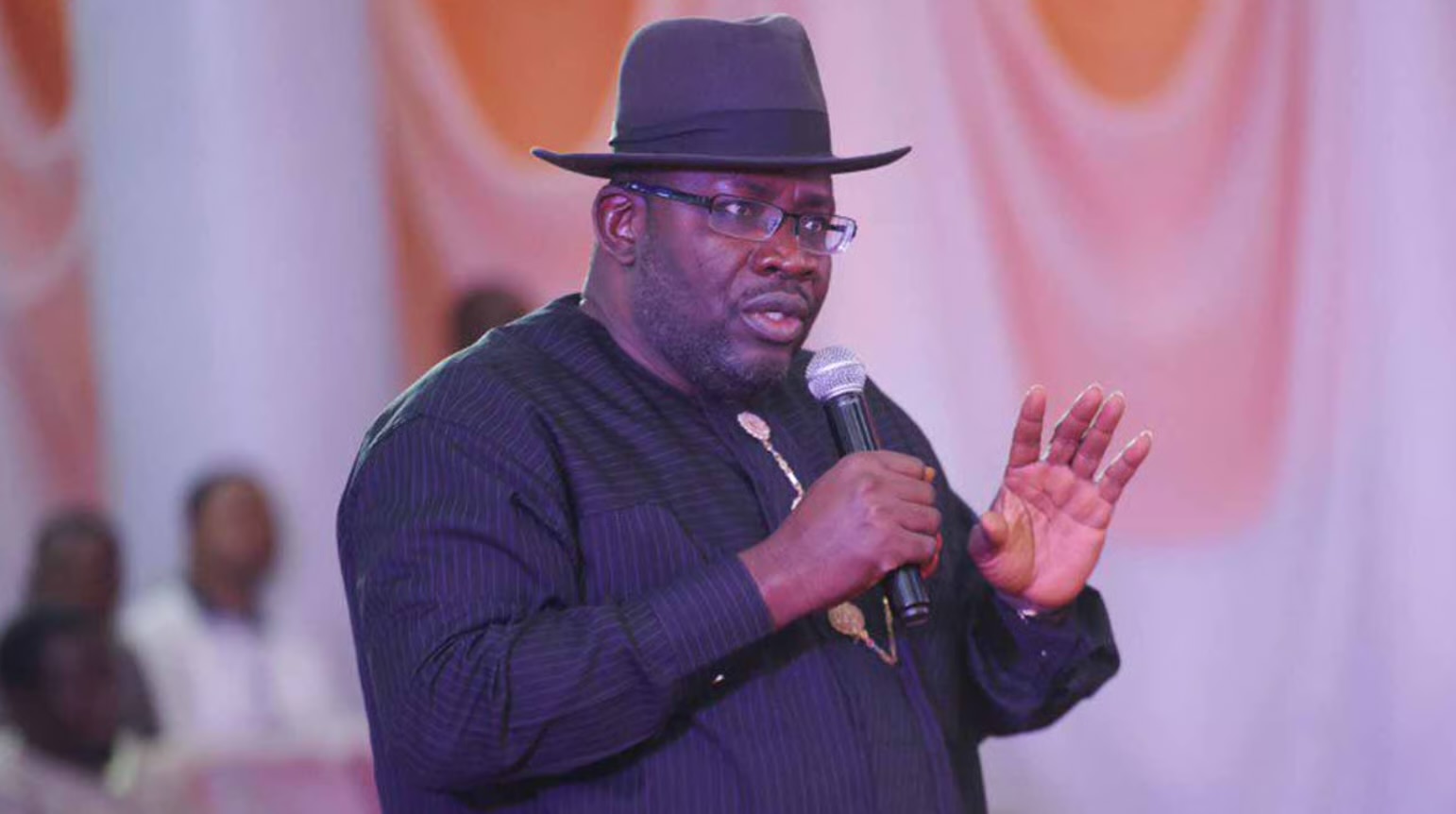
Senator Seriake Dickson spent weeks building a political party that few in Nigeria’s crowded opposition landscape took seriously. When he launched the Nigeria Democratic Congress (NDC) in March, it was seen as yet another addition to a field dominated by bigger, more established platforms.
But that perception is beginning to shift.
The former Bayelsa State governor and serving senator has drawn two of the most prominent figures from Nigeria’s previous presidential race, Peter Obi and Rabiu Musa Kwankwaso, into his party, rapidly turning the NDC into a major opposition platform ahead of 2027.
For Dickson, the moment is less accidental than it may look.

Building a strong opposition
When he announced the formation of the NDC on the floor of the Senate on 13 March 2026, shortly after defecting from the Peoples Democratic Party(PDP), he framed the party as a deliberate response to what he described as Nigeria’s drift towards a one-party system under President Bola Tinubu’s All Progressives Congress (APC).
“Democracy thrives on strong opposition, healthy debate and credible alternatives, and that is what we intend to build,” Dickson told the Senate.
Even then, Dickson kept his distance from the African Democratic Congress (ADC), a coalition that was attracting leading opposition figures including Obi, Kwankwaso and former vice president Atiku Abubakar. While the alliance was widely viewed as the most viable challenger to the APC, Dickson was sceptical of its internal cohesion and long-term direction.
“Time will tell whether it is a coalition or a collision,” he says, in a remark that now seems prescient.
In the weeks that followed, the ADC became increasingly defined by leadership disputes, legal battles and disagreements over how to select a presidential candidate. Those fractures would eventually drive out some of its most prominent members, including Obi and Kwankwaso, both of whom cited internal crises and uncertainty over the party’s direction.
Their eventual move to the NDC has not only validated Dickson’s caution but has also repositioned him from the margins of opposition politics to its centre, raising fresh questions about whether he has, quietly, built a more durable political platform than his rivals.
Abubakar Umar Kari, a professor of political sociology at the University of Abuja, said Dickson was following a familiar path taken by politicianswho transformed small parties into powerful regional forces. “Dickson has the structure, influence and local goodwill to turn the NDC into a serious force in Bayelsa. If managed well, the party could still surprise many people.”
From PDP insider to party founder
Dickson’s rise to the head of a new opposition platform marks another turn in a political career that has largely been defined by resistance politics.
Since leaving office in 2020 after two terms as Bayelsa governor, he has remained a vocal critic of successive federal administrations, often clashing with former president Muhammadu Buhari and President Tinubu over issues such as federal power and electoral reforms.
In the Senate, Dickson became one of the strongest voices against attempts to weaken the electronic transmission of election results during debates over the Electoral Act 2022, arguing that credible elections were central to preserving public trust in democracy.
Dickson said allowing electronic transmission of results would enable parties to track outcomes directly from polling units, reducing “brigandage, executive interference and thuggery” at collation centres. He added that candidates would be able to “know who has won” from the primary evidence of the vote.
[ADC] was only presenting itself as a platform to unseat Tinubu
His stance aligned him, at least indirectly, with Obi and sections of civil society groups that had pushed for greater electoral transparency after the disputed 2023 election. Opposition parties said the Independent National Electoral Commission (INEC)failed to comply with the Electoral Act on real-time result transmission, a lapse they argued fuelled suspicions. They also alleged that irregularities in the presidential election raised doubts about the effectiveness of INEC’s digital tools designed to prevent rigging.
An associate, requesting anonymity, said Dickson felt the ADC “was only presenting itself as a platform to unseat Tinubu, rather than offering a clear vision and alternative”, arguing that the coalition lacked a coherent ideological and governance agenda beyond opposing the president.
Instead of joining them, Dickson began quietly building the NDC around a smaller circle of loyalists and political associates, betting that the widening fractures inside the opposition would eventually force major politicians to seek a more stable platform.
That gamble appears to be paying off.
Rewriting the equation
For Obi and Kwankwaso, the move to the NDC offers something they had struggled to secure in previous political arrangements: a stable structure without the immediate threat of internal collapse.
If the NDC nominates Obi for president and Kwankwaso as his running mate, they would pose a serious challenge
Both politicians built large followings but operated within platforms repeatedly weakened by factional disputes, legal battles and disagreements over control of the presidential ticket. The two-month-old NDC, largely centred around Dickson’s political network, offers a cleaner slate and a clearer pathway to a primary contest.
For Obi, it offers a party whose leadership broadly aligns with his long-standing emphasis on electoral credibility and institutional reform. For Kwankwaso, it provides a northern base within a South-zoned coalition, allowing his movement to retain influence without bearing the pressure of a frontline candidacy.
Together, the two seasoned politicians bring what the NDC previously lacked: national reach. Political analyst Bala Yusuf said the pairing could reshape the early race because of their complementary regional strengths. “If the NDC nominates Obi for president and Kwankwaso as his running mate, they would pose a serious challenge to the ruling APC at the polls,” he says.
Still, whether this alignment translates into durability remains uncertain. Nigerian opposition coalitions have often expanded quickly only to fragment under the weight of competing ambitions. And legal challenges to the NDC emerged almost as soon as Obi announced he was joining.
For now, however, the NDC represents a rare convergence of structure, ambition and timing, with Dickson at its centre, and two of the country’s most recognisable opposition figures operating inside it.
(The Africa Report)
-

 Business13 hours ago
Muslim group urges Nigerian Govt to force fuel price down below N700 per litre
-
Metro12 hours ago
PHOTOS: Nollywood Actor Joins US Army
-
News13 hours ago
FG Moves to Track Ransom Payments Through Cashless Reforms
-
 Metro12 hours ago
‘I have no regrets’ – Abacha’s most feared officer Frank Omenka speaks after 30 years of silence
-
Politics12 hours ago
Court order to derecognize NDC judicial banditry – Reps Caucus
-
Sports12 hours ago
Dembele hits hat-trick as France dismantle Norway
-
News12 hours ago
Seven Boko Haram, ISWAP commanders arrested returning from Mecca at Katsina Airport
-
World News12 hours ago
US strikes Iran after attack on cargo ship in Strait of Hormuz